Aerospace & Defense / Case Study
Flight Control & Dashboard
Rapid prototyping for a ground effect aircraft software system — sensor integration, real-time pilot dashboard, and protocol decoding.

Project Overview
Rapid Prototyping for Ground Effect Aircraft Software System
KEC was engaged to support a customer developing an innovative ground effect aircraft — a low-flying craft designed to skim above water surfaces using the aerodynamic principle of ground effect. The goal was to build a prototype quickly, with reliable software capable of interfacing with diverse onboard systems, sensors, and real-time displays.
KEC was responsible for designing the full software architecture, integrating sensor data acquisition and pilot dashboard display, all while allowing flexibility for hardware changes during the R&D process.
What We Built
Key Deliverables
Modular Architecture for Agile Development
The dynamic nature of prototyping meant hardware components were frequently evolving. KEC implemented a modular software architecture, allowing isolated development of each subsystem with clean interfaces. This design accelerated integration, reduced testing time, and supported future expansion without rewriting the entire codebase.
Real-Time Pilot Dashboard
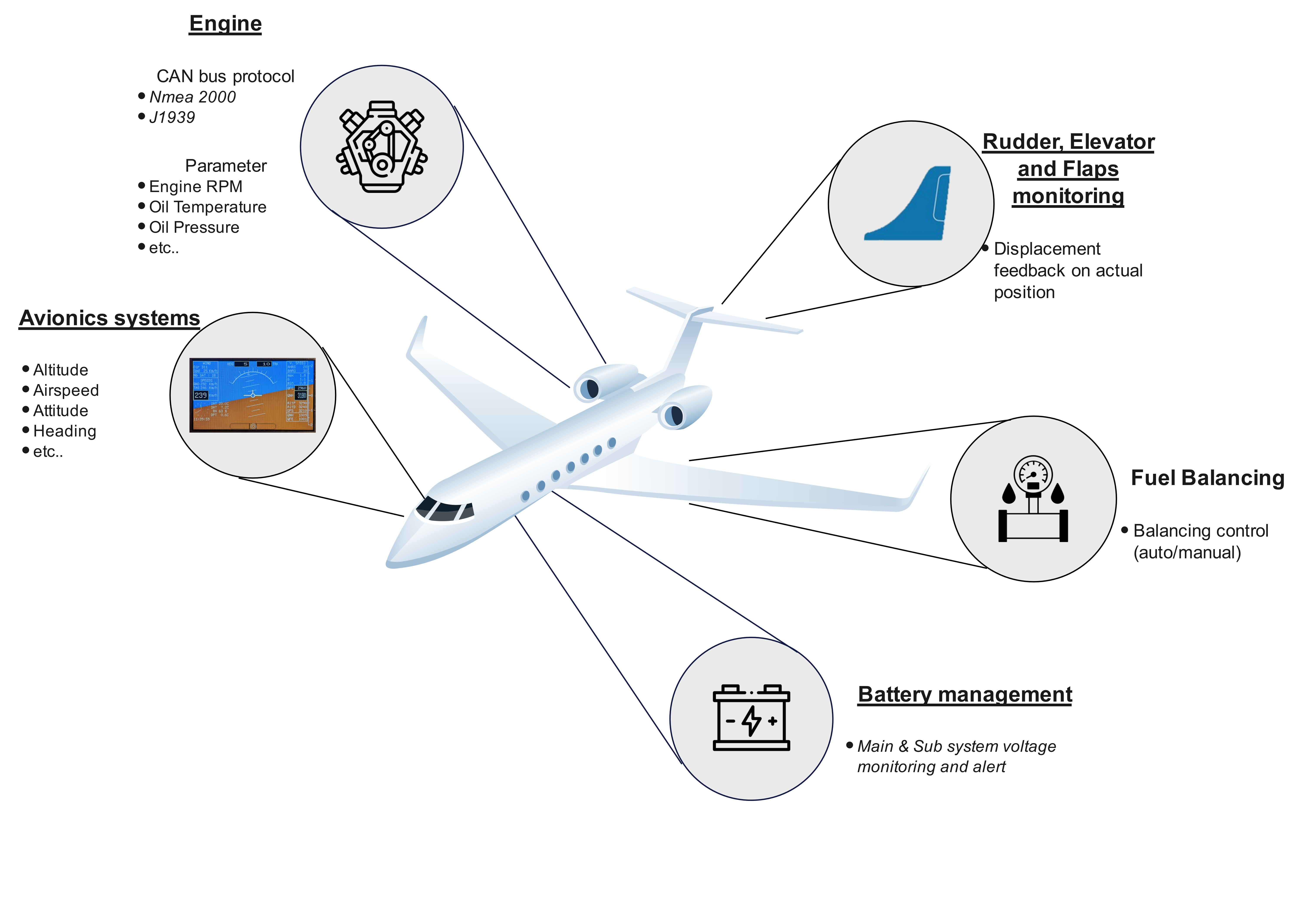
A custom real-time dashboard for the pilot was built, displaying critical flight information such as position, velocity, altitude, and system health. Built using flexible UI components, the dashboard was optimised for clarity and responsiveness, and could be deployed on common HMI platforms.
Sensor Integration & Data Acquisition
KEC developed a robust data acquisition framework that allowed synchronised, real-time readings of flight parameters from multiple onboard sensors. The architecture supported easy addition of new sensors, enabling rapid iteration during the test and refinement phases.
Protocol Decoding & Flight Instrument Integration
A major challenge was decoding communication from components using custom SAE J1939 implementations and other flight-specific protocols like Garmin G3X and EFIS systems. KEC deciphered these proprietary data packets and translated them into readable, actionable information for the pilot dashboard.
Deployment & Test Flights
KEC participated in the aircraft's test flight sessions, where the entire software stack was validated in a real-world environment. The dashboard provided reliable real-time insights during flight, and the modular software allowed fast in-field adjustments, significantly accelerating the feedback loop.