Manufacturing / Case Study
Smart Quality Control for Complex Manufacturing
A factory-wide modular QC platform designed for high-mix, high-complexity production lines — scalable, traceable, and fully integrated.
Project Overview
Smart Quality Control for Complex Manufacturing
In today's high-mix, high-complexity manufacturing environments, quality control (QC) systems need to do more than just detect defects — they must handle product diversity, ensure consistent testing, and integrate seamlessly into production workflows.
Our customer, a manufacturer of transport refrigeration equipment, needed a scalable QC solution to test products that combine mechanical, electrical, and software components, all while supporting multiple product configurations on the same production line.
What We Solved
Customer Challenges
The customer faced several key QC challenges that required a systematic, flexible approach to resolve.
Diverse Product Lines
Multiple product variants required flexible test setups that could adapt to different configurations without manual reconfiguration, reducing the risk of incorrect test procedures being applied to the wrong product.
Multi-Disciplinary Systems
Products combining mechanical, electrical, and software components required comprehensive testing at multiple levels. A unified platform was needed to coordinate these distinct test domains under a single framework.
Lack of Structured Data & Traceability
Data collection and reporting lacked structure and traceability, making it difficult to identify failure trends, support audits, or demonstrate compliance with quality standards.
Inconsistent QC Across Shifts
Maintaining consistent quality control across different shifts and stations was difficult, as manual processes introduced variability that affected test reliability and overall product quality.
How We Solved It
The Solution
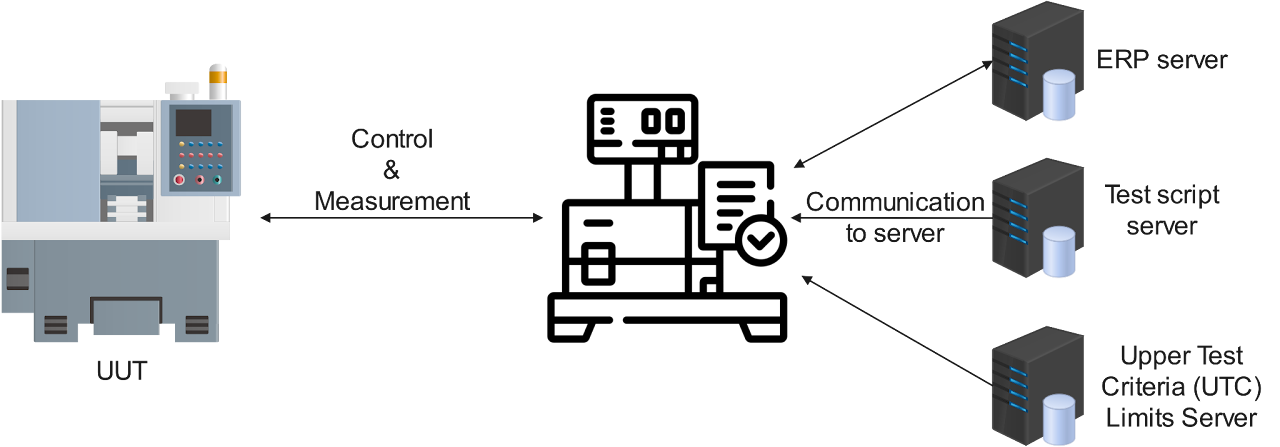
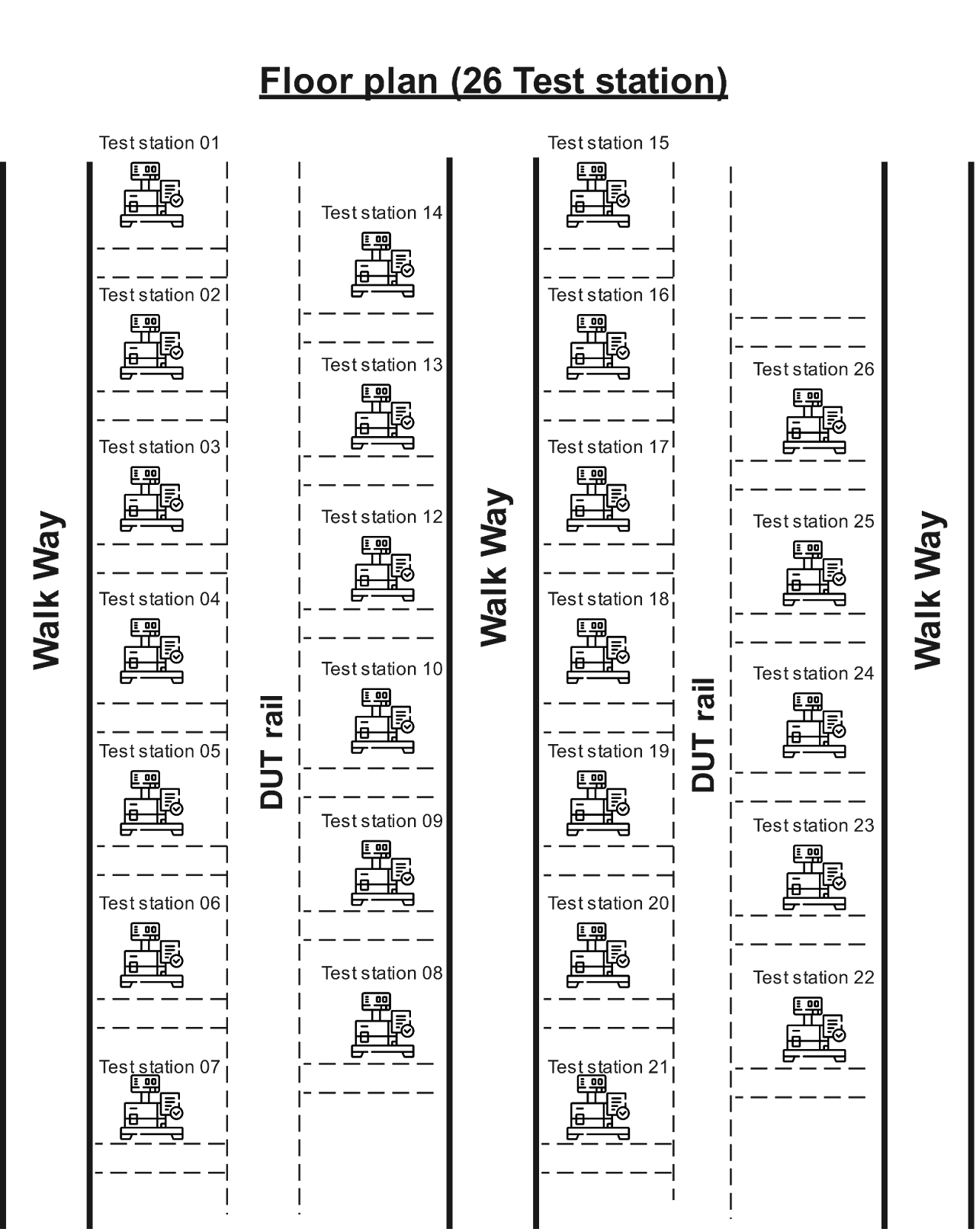
To address the customer's challenges, KEC developed a factory-wide quality control solution built around multiple smart test stations. Each station operates independently but adheres to a standardised, traceable testing framework to ensure consistency and reliability across the production floor.
Each test station is designed to support any product line. By scanning the Device Under Test (DUT)'s unique ID, the system automatically identifies the product and loads the appropriate test script. This flexibility allows the same station to adapt to different models without requiring manual configuration.
- Automatic product identification via DUT unique ID scanning
- Dynamic test script loading per product configuration
- Standardised, traceable testing framework across all stations
- Integration with ERP/MES platforms for seamless data flow
- Real-time monitoring and structured report generation
Outcomes
Results
Reduced Setup & Test Times
Significantly reduced setup and test times across all product lines through automated script loading and standardised workflows.
Consistent Testing
More consistent testing across all product lines and shifts, eliminating operator-dependent variability.
Enhanced Traceability
Full traceability of test results per unit, supporting audits, failure analysis, and regulatory compliance.
Flexible & Future-Ready
The flexibility to quickly adapt to new products and evolving test requirements with minimal rework to the platform.